Energy Harvesting: Ambient Energy for Low-Power Systems

RECOM offers ultra-low-power energy harvesting modules and evaluation boards engineered to capture and convert low-level ambient energy—from indoor light and thermal gradients to mechanical vibration. Designed to eliminate routine battery replacements in remote or hard-to-reach locations, RECOM’s power management solutions boost micro-volt inputs, manage supercapacitor and rechargeable battery storage, and deliver stable, regulated supply rails for low-power microprocessors, sensor nodes, and wireless communication modules.

The electromagnetic spectrum of UV and visible light

Fig. 1: The electromagnetic spectrum of UV and visible light illustrates sources for electromagnetic energy collection.

Common Ambient Energy Sources

Photovoltaic

Solar cells generate useful amounts of photovoltaic power by absorbing photons, even from indoor ambient lighting. A typical single PV cell produces an open-circuit DC output voltage of approximately 500mV to 800mV at 100 Lux. Higher voltages can be achieved by wiring multiple cells in series, increasing surface area, or exposing cells to stronger light. Because output voltage drops significantly under heavy load, the system must continuously track the maximum power point (MPP) to compensate for fluctuating light intensity.

Thermoelectric

When a temperature gradient exists across two dissimilar conductors or semiconductor junctions, an electric current is produced—a phenomenon known as the Seebeck effect. Thermoelectric generators (TEGs) exploit this effect to convert ambient heat into usable DC power. The resulting electrical power increases proportionally with the surface area of the generator and the temperature differential between its hot and cold junctions.

Vibration

The most common vibration energy harvesters utilize a spring-loaded mass that drives a magnet relative to fixed coils to generate AC power. Tuning the mass-spring system to resonate at the dominant ambient vibration frequency maximizes power transfer and energy yield.

Mass-Flow

Moving liquids or gases drive small turbines to generate electrical power. These micro-turbines can be installed inside HVAC ducts, fluid piping, or vehicle exteriors to harvest AC energy from forced air or fluid movement. Vortex-shedding provides a reliable, solid-state alternative with no moving parts, frequently paired with piezoelectric elements to convert flow-induced oscillations into AC voltage.

Piezoelectric

Piezoelectric harvesting converts mechanical strain or deformation directly into electrical energy, producing a high-voltage, low-current output. For example, a piezoelectric element is often attached to a flexible, vortex-shedding wand to convert fluid-induced oscillations into usable AC voltage.

Electromagnetic

Devices that collect electromagnetic energy—such as stray electric fields, Wi-Fi signals, or ambient radio waves—use specialized antennas and rectifiers (rectennas) to generate low-level electrical power, typically in the μW range. This method is predominantly used for low-duty-cycle indoor sensing, though higher power yield can be achieved outdoors when paired with dedicated, directed microwave energy beams.

Electronic Components of an Energy Harvesting System

Boost Converter

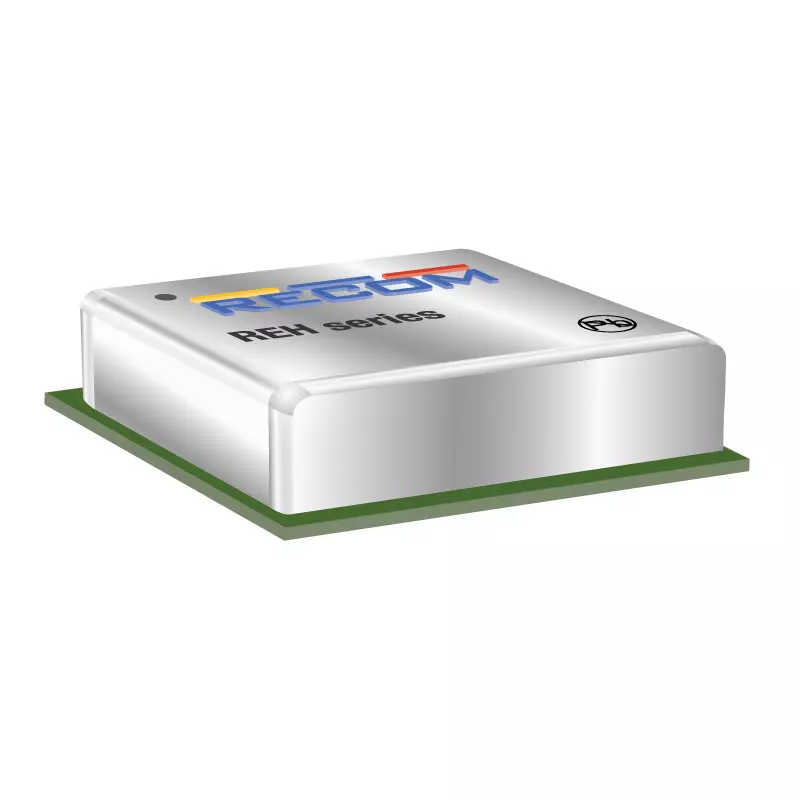
Most ambient energy sources provide an output voltage that is too low for direct circuit operation. Therefore, the first stage of an energy harvesting system is a DC/DC converter configured as a boost converter. The boost converter steps up this ultra-low input voltage to a higher level suitable for charging a supercapacitor or rechargeable battery. For example, the REH harvester accepts input voltages starting from just 0.05VDC and boosts them up to 4.12VDC for a rechargeable battery or 4.50VDC for a two-cell supercapacitor (pin-selectable).

System Controller

The system controller manages the charging and discharging of energy storage elements to prevent overcharge or over-discharge. It also provides status indicators and early-warning signals for imminent power failure if the storage element becomes depleted. In the REH harvester, the controller incorporates an integrated battery backup switch, automatically transitioning the load to a primary-cell battery whenever ambient energy is insufficient (such as a photovoltaic source at night).

Buck Converter

Because the voltage stored in a battery or supercapacitor varies as it drains and lacks short-circuit protection, a downstream buck converter is required. The buck converter efficiently steps down this unregulated storage voltage to a stable, fixed output with integrated short-circuit protection. For example, the REH harvester incorporates two independent, regulated buck converters supplying 1.8VDC and 3.3VDC rails to reliably power downstream microcontrollers and sensor payloads.
Block diagram of REH3.31.8 energy harvester module with source, backup, storage, and application
  Series Main Vout (V) Vin (V) Package Style
1 RECOM | RAC04NE-K/277 Series | AC/DC, 4W, Single Output
Focus
12, 15, 24, 5, 9 85 - 305 Encapsulated 1.45"x0.94", Encapsulated 1.48"x0.97" (IP65)
2 RECOM | REH Series | DC/DC, SMD (pinless), Dual Output
1.71 to 3.47 / 1.8 0.05 - 5 25 pad LGA
3 RECOM | REH-3.31.8-EVM-1 Series | DC/DC, Dual Output
1.71 to 3.47 / 1.8 0.05 - 5 Open Frame

Frequently Asked Questions

Dedicated energy harvesting power management modules like the REH feature ultra-low-voltage boost converters capable of starting up from input voltages as low as 0.05VDC. This enables the system to harvest usable electrical energy from minor thermal gradients (TEGs) or low-light indoor photovoltaic cells.
RECOM energy harvesting controllers support both pin-selectable 4.12VDC profiles for rechargeable micro-batteries and 4.50VDC profiles for two-cell supercapacitor stacks. The integrated controller manages charge and discharge cycles while providing built-in protection against overcharging and deep discharge.
The system controller includes an integrated battery backup switch that automatically transitions the downstream load to a primary non-rechargeable battery (such as a coin cell) whenever ambient energy drops below operational thresholds—ensuring uninterrupted power for wireless sensor nodes during long periods without light or vibration.

...didn't find what you were looking for?

Use our parametric search or find a sales contact near you.